Monday, 27 March 2017
How to dump scheduling graph?
78. How to dump scheduling graph?
/home/jtony/git-llvm/build/team-llvm/bin/llc /home/jtony/scrum/s11/memcpy/jtony/ppc.ll -view-misched-dags 2>&1 | /home/sfertile/bin/capture_dot
test/CodeGen/PowerPC/reduced.ll
79. How to show hidden llc options?
llc -help-hidden
like:
-view-misched-dags - Pop up a window to show MISched dags after they are processed
-view-sched-dags - Pop up a window to show sched dags as they are processed
-view-sunit-dags - Pop up a window to show SUnit dags after they are processed

Sunday, 26 March 2017
What is llvm-dis?
The llvm-dis command is the LLVM disassembler. It takes an LLVM bitcode file and converts it into human-readable LLVM assembly language.
If the input is being read from standard input, then llvm-dis will send its output to standard output by default. Otherwise, the output will be written to a file named after the input file, with a
.ll suffix added (any existing .bc suffix will first be
removed). You can override the choice of output file using the
-o option.
Saturday, 25 March 2017
迭代文件中的行、单词和字符
1. 迭代文件中的每一行
- while 循环法
while read line;doecho $line;done < file.txt
改成子shell:
cat file.txt | (while read line;do echo $line;done)
- awk法:
cat file.txt| awk '{print}'
2.迭代一行中的每一个单词
for word in $line;doecho $word;done
3. 迭代每一个字符
${string:start_pos:num_of_chars}:从字符串中提取一个字符;(bash文本切片)
${#word}:返回变量word的长度
for((i=0;i<${#word};i++))doecho ${word:i:1);done
[URL=http://www.visitormap.org/][IMG]http://www.visitormap.org/map/m:bekbxjyftgtbwlff/s:1/c:ffffff/p:dot/y:0.png[/IMG][/URL]
Thursday, 23 March 2017
LDUX/ldux ( Load Doubleword with Update Indexed)
Load Doubleword with Update Indexed
X-form
ldux RT,RA,RB
31 RT RA RB 53 /
0 6 11 16 21 31
EA <= (RA) + (RB)
RT <= MEM(EA, 8)
RA <= EA
Let the effective address (EA) be the sum (RA)+ (RB).
The doubleword in storage addressed by EA is loaded
into RT.
EA is placed into register RA.
If RA=0 or RA=RT, the instruction form is invalid.
Special Registers Altered:
None
D-Form VS X-Form
20. D-Form VS X-Form
D-Form is the immediate/register addressing mode.
X-Form is the register/register addressing mode.
Otherwise known as unindexed and indexed loads respectivelly
So if you have a series consecutive loads, the D-Form loads have a huge advantage.
Because with X-Form loads you have to have the offset in a register so you get consecutive
offsets by either using multiple registers or having instructions in between to increment the offset.
D-Form is the immediate/register addressing mode.
X-Form is the register/register addressing mode.
Otherwise known as unindexed and indexed loads respectivelly
So if you have a series consecutive loads, the D-Form loads have a huge advantage.
Because with X-Form loads you have to have the offset in a register so you get consecutive
offsets by either using multiple registers or having instructions in between to increment the offset.
call back function
C Callbacks
Callbacks have a wide variety of uses, for example in error signaling: a Unix program might not want to terminate immediately when it receives SIGTERM, so to make sure that its termination is handled properly, it would register the cleanup function as a callback. Callbacks may also be used to control whether a function acts or not: Xlib allows custom predicates to be specified to determine whether a program wishes to handle an event.The following C code demonstrates the use of callbacks to display two numbers.
#include <stdio.h>
#include <stdlib.h>

/* The calling function takes a single callback as a parameter. */
void PrintTwoNumbers(int (*numberSource)(void)) {
    printf("%d and %d\n", numberSource(), numberSource());
}

/* A possible callback */
int overNineThousand(void) {
    return (rand()%1000) + 9001;
}

/* Another possible callback. */
int meaningOfLife(void) {
    return 42;
}

/* Here we call PrintTwoNumbers() with three different callbacks. */
int main(void) {
    PrintTwoNumbers(&rand);
    PrintTwoNumbers(&overNineThousand);
    PrintTwoNumbers(&meaningOfLife);
    return 0;
}
125185 and 89187225
 9084 and 9441
 42 and 42
From
知乎
作者:桥头堡
链接:https://www.zhihu.com/question/19801131/answer/27459821
来源:知乎
著作权归作者所有。商业转载请联系作者获得授权,非商业转载请注明出处。
链接:https://www.zhihu.com/question/19801131/answer/27459821
来源:知乎
著作权归作者所有。商业转载请联系作者获得授权,非商业转载请注明出处。
什么是回调函数?
我们绕点远路来回答这个问题。
编程分为两类:系统编程(system programming)和应用编程(application programming)。所谓系统编程,简单来说,就是编写库;而应用编程就是利用写好的各种库来编写具某种功用的程序,也就是应用。系统程序员会给自己写的库留下一些接口,即API(application programming interface,应用编程接口),以供应用程序员使用。所以在抽象层的图示里,库位于应用的底下。
当程序跑起来时,一般情况下,应用程序(application program)会时常通过API调用库里所预先备好的函数。但是有些库函数(library function)却要求应用先传给它一个函数,好在合适的时候调用,以完成目标任务。这个被传入的、后又被调用的函数就称为回调函数(callback function)。
打个比方,有一家旅馆提供叫醒服务,但是要求旅客自己决定叫醒的方法。可以是打客房电话,也可以是派服务员去敲门,睡得死怕耽误事的,还可以要求往自己头上浇盆水。这里,“叫醒”这个行为是旅馆提供的,相当于库函数,但是叫醒的方式是由旅客决定并告诉旅馆的,也就是回调函数。而旅客告诉旅馆怎么叫醒自己的动作,也就是把回调函数传入库函数的动作,称为登记回调函数(to register a callback function)。如下图所示(图片来源:维基百科):
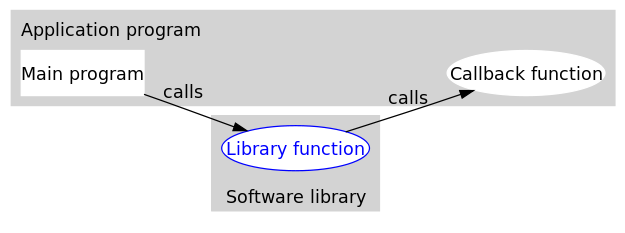
可以看到,回调函数通常和应用处于同一抽象层(因为传入什么样的回调函数是在应用级别决定的)。而回调就成了一个高层调用底层,底层再回过头来调用高层的过程。(我认为)这应该是回调最早的应用之处,也是其得名如此的原因。
我们绕点远路来回答这个问题。
编程分为两类:系统编程(system programming)和应用编程(application programming)。所谓系统编程,简单来说,就是编写库;而应用编程就是利用写好的各种库来编写具某种功用的程序,也就是应用。系统程序员会给自己写的库留下一些接口,即API(application programming interface,应用编程接口),以供应用程序员使用。所以在抽象层的图示里,库位于应用的底下。
当程序跑起来时,一般情况下,应用程序(application program)会时常通过API调用库里所预先备好的函数。但是有些库函数(library function)却要求应用先传给它一个函数,好在合适的时候调用,以完成目标任务。这个被传入的、后又被调用的函数就称为回调函数(callback function)。
打个比方,有一家旅馆提供叫醒服务,但是要求旅客自己决定叫醒的方法。可以是打客房电话,也可以是派服务员去敲门,睡得死怕耽误事的,还可以要求往自己头上浇盆水。这里,“叫醒”这个行为是旅馆提供的,相当于库函数,但是叫醒的方式是由旅客决定并告诉旅馆的,也就是回调函数。而旅客告诉旅馆怎么叫醒自己的动作,也就是把回调函数传入库函数的动作,称为登记回调函数(to register a callback function)。如下图所示(图片来源:维基百科):
可以看到,回调函数通常和应用处于同一抽象层(因为传入什么样的回调函数是在应用级别决定的)。而回调就成了一个高层调用底层,底层再回过头来调用高层的过程。(我认为)这应该是回调最早的应用之处,也是其得名如此的原因。
LXVD2X/lxvd2x (Load VSX Vector Doubleword*2 Indexed)
Load VSX Vector Doubleword*2 Indexed
X-form
lxvd2x XT,RA,RB
31 T RA RB 844 TX
0 6 11 16 21 31
if MSR.VSX=0 then VSX_Unavailable()
EA <= RA=0 ? GPR[RB] : GPR[RA] + GPR[RB]
VSR[32×TX+T].dword[0] <= MEM(EA, 8)
VSR[32×TX+T].dword[1] <= MEM(EA+8, 8)
Let XT be the value 32×TX + T.
Let EA be the sum of the contents of GPR[RA], or 0 if RA
is equal to 0, and the contents of GPR[RB].
For each integer value i from 0 to 1, do the following.
When Big-Endian byte ordering is employed, the
contents of the doubleword in storage at address
EA+8×i are placed into load_data in such an order
that;
– the contents of the byte in storage at address
EA+8×i are placed into byte element 0 of
load_data,
– the contents of the byte in storage at address
EA+8×i+1 are placed into byte element 1 of
load_data, and so forth until
– the contents of the byte in storage at address
EA+8×i+7 are placed into byte element 7 of
load_data.
When Little-Endian byte ordering is employed, the
contents of the doubleword in storage at address
EA+8×i are placed into load_data in such an order
that;
– the contents of the byte in storage at address
EA+8×i are placed into byte element 7 of
load_data,
– the contents of the byte in storage at address
EA+8×i+1 are placed into byte element 6 of
load_data, and so forth until
X-form
lxvd2x XT,RA,RB
31 T RA RB 844 TX
0 6 11 16 21 31
if MSR.VSX=0 then VSX_Unavailable()
EA <= RA=0 ? GPR[RB] : GPR[RA] + GPR[RB]
VSR[32×TX+T].dword[0] <= MEM(EA, 8)
VSR[32×TX+T].dword[1] <= MEM(EA+8, 8)
Let XT be the value 32×TX + T.
Let EA be the sum of the contents of GPR[RA], or 0 if RA
is equal to 0, and the contents of GPR[RB].
For each integer value i from 0 to 1, do the following.
When Big-Endian byte ordering is employed, the
contents of the doubleword in storage at address
EA+8×i are placed into load_data in such an order
that;
– the contents of the byte in storage at address
EA+8×i are placed into byte element 0 of
load_data,
– the contents of the byte in storage at address
EA+8×i+1 are placed into byte element 1 of
load_data, and so forth until
– the contents of the byte in storage at address
EA+8×i+7 are placed into byte element 7 of
load_data.
When Little-Endian byte ordering is employed, the
contents of the doubleword in storage at address
EA+8×i are placed into load_data in such an order
that;
– the contents of the byte in storage at address
EA+8×i are placed into byte element 7 of
load_data,
– the contents of the byte in storage at address
EA+8×i+1 are placed into byte element 6 of
load_data, and so forth until
Subscribe to:
Posts (Atom)